How to Meet People After Moving: Your First 4 Weekends
Learn how to meet people after moving with a practical 4-weekend plan. Explore local events, build routines, make friends, and settle into your new city.
Table of Contents
Moving to a new city can be exciting, but building a social life from scratch is not always easy. You may have a new home, a different neighbourhood, and plenty of places to explore, yet still wonder who to call when you want to grab coffee, attend an event, or make plans on a Saturday night.
If you're searching for how to
the most effective approach is to create small opportunities for connection instead of putting pressure on yourself to make close friends immediately. Your first few weekends can help you learn your surroundings, discover shared interests, and start building routines that bring you into contact with the same people.
This four-weekend guide gives you a practical plan for settling in, meeting people after relocating, and feeling more connected to your new community. Whether you've moved for work, education, family, or a fresh start, you can adapt these activities to your schedule, budget, and personality.
Why Is Making Friends After Moving So Difficult?
Relocation changes more than your address. It can also change the everyday interactions that previously made socialising feel natural.
In your previous city, you might have regularly seen colleagues, neighbours, classmates, gym members, or familiar faces at your favourite coffee shop. After moving, those familiar routines disappear. You may need to make a conscious effort to find new places, introduce yourself, and organise social activities.
Several common challenges can make the transition difficult:
A smaller social circle: You may not know anyone nearby who is available to meet.
Unfamiliar surroundings: You are still learning where people gather and which activities are worth trying.
Busy schedules: Work, unpacking, commuting, and household responsibilities can leave little energy for socialising.
Fear of rejection: Approaching strangers or attending an event alone can feel uncomfortable.
Moving and loneliness: Even when a move is positive, missing familiar people and places can affect your sense of belonging.
These experiences do not mean you are bad at making friends. They often mean that your usual opportunities for connection have changed.
The solution is to build a new social routine gradually. Rather than trying to meet everyone at once, focus on activities that make it easier to see people repeatedly and start conversations naturally.
Your First 4 Weekends: A Practical Plan for Meeting People
You don't need to fill every hour with social activities. Each weekend should have one main goal, a few manageable actions, and enough flexibility to rest.
Weekend 1: Explore Your Neighbourhood and Become a Familiar Face
Goal: Get comfortable in your new area and discover places where you could meet people.
Your first weekend is about exploration, not immediately finding your closest friends. Familiarity with your surroundings makes future social plans easier and helps you identify activities you genuinely enjoy.
1. Find three places you would visit regularly
Choose three locations within a comfortable distance from home. For example:
A coffee shop, bakery, or casual restaurant
A park, walking route, or public recreation area
A gym, library, community centre, or hobby space
Visit at a time when you can relax rather than rushing through errands. Notice whether people tend to work, socialise, exercise, or participate in group activities there.
Returning to the same place can make casual conversation easier. You might recognise the barista, see the same dog walkers, or encounter people who attend a regular weekend class.
Familiarity does not automatically create friendship, but it gives you more opportunities to start conversations without forcing an introduction.
2. Learn what your neighbourhood offers
Search for community calendars, local event listings, recreation programmes, public workshops, and interest-based groups. Check which activities happen weekly or monthly, since recurring events can provide more opportunities to get to know people.
Look for activities that fit your interests rather than choosing something only because it seems popular. If you enjoy music, consider a local performance or open-mic night. If you prefer being active, try a group walk, fitness class, or beginner-friendly sports session.
3. Start with small conversations
You don't need an impressive opening line. A simple question related to the situation is usually enough.
Try:
Have you been coming here for a while?
Do you know any good walking routes around here?
Have you tried any other classes in the area?
Is there a local event you would recommend?
If the other person seems interested, continue the conversation. If they give short answers or appear busy, politely move on.
Your Weekend 1 checklist
Explore three nearby places.
Identify two local events or groups.
Start one or two casual conversations.
Choose one activity to try next weekend.
By the end of your first weekend, success means knowing a little more about your surroundings and having a few ideas for future plans—not having an entirely new friend group.
Weekend 2: Join an Activity Where Conversation Happens Naturally
Goal: Meet people through a shared interest rather than relying entirely on introductions.
The second weekend is a good time to move from exploring alone to participating in something with other people.
Shared activities give you a natural topic to discuss. You already have something in common, whether it's music, cooking, running, photography, board games, volunteering, or learning a new skill.
1. Choose one activity you can enjoy even if you meet nobody
This is an important rule. Select an event because you would find it worthwhile anyway.
Some options include:
A group fitness session or community run
A cooking, art, or photography workshop
A live music event or local jam session
A book club or board-game gathering
A neighbourhood clean-up or volunteer activity
A walking tour or cultural event
When the activity itself is enjoyable, the experience feels less like a test of your social skills. You can leave having done something worthwhile even if you don't make a connection immediately.
2. Arrive a little early
Arriving before an activity becomes crowded can make it easier to talk to the organiser or another participant. Ask a practical question about the event, equipment, schedule, or activity.
During the event, look for natural opportunities to interact. You could ask someone how long they have been attending, discuss the activity, or offer a friendly comment about something you both experienced.
Avoid treating every conversation as a potential friendship. Your immediate goal is to become more comfortable meeting people.
3. Follow up with one simple invitation
If you have a pleasant conversation with someone, consider making a small, specific invitation.
For example:
"I enjoyed talking with you. Would you like to grab coffee after next week's class?"
A specific invitation is easier to answer than "We should hang out sometime." It also gives both people a clear idea of what the plan involves.
If they are unavailable, you can leave the door open without taking it personally. People have different schedules, and one declined invitation does not necessarily mean they are uninterested in friendship.
Your Weekend 2 checklist
Attend one shared-interest activity.
Introduce yourself to at least two people if opportunities arise.
Have one conversation beyond basic introductions.
Invite someone to a simple follow-up activity if it feels appropriate.
Weekend 3: Turn New Acquaintances Into Real Connections
Goal: Build on the conversations you've already started.
Making friends after moving usually involves more than meeting someone once. Relationships often develop through repeated interactions, shared experiences, and small acts of follow-through.
By your third weekend, review the places and activities you've tried. Did you enjoy the running group? Did a workshop introduce you to someone with similar interests? Was there a local event you wanted to attend again?
Focus on the opportunities that felt most comfortable and enjoyable.
1. Return to an activity from Weekend 2
Seeing familiar faces again makes it easier to continue previous conversations. You might remember someone's name, ask how their week went, or follow up on something they mentioned.
These small details can help a conversation feel less like meeting a stranger for the first time.
2. Suggest a low-pressure group plan
If you've met a few people who seem interested in socialising, suggest a simple activity that does not require a lot of coordination.
Examples include:
Coffee after a weekend class
Lunch at a casual local restaurant
A group walk through a nearby park
Attending a community event together
Visiting a market, exhibition, or live performance
A group plan can feel less intense than a one-on-one invitation, particularly when everyone is still getting to know one another.
3. Use digital tools to make real-world plans
Digital communities and social discovery apps can help you find events, identify people with similar interests, and coordinate meetups. The important part is to use them as a bridge to genuine interactions rather than another place to spend hours scrolling.
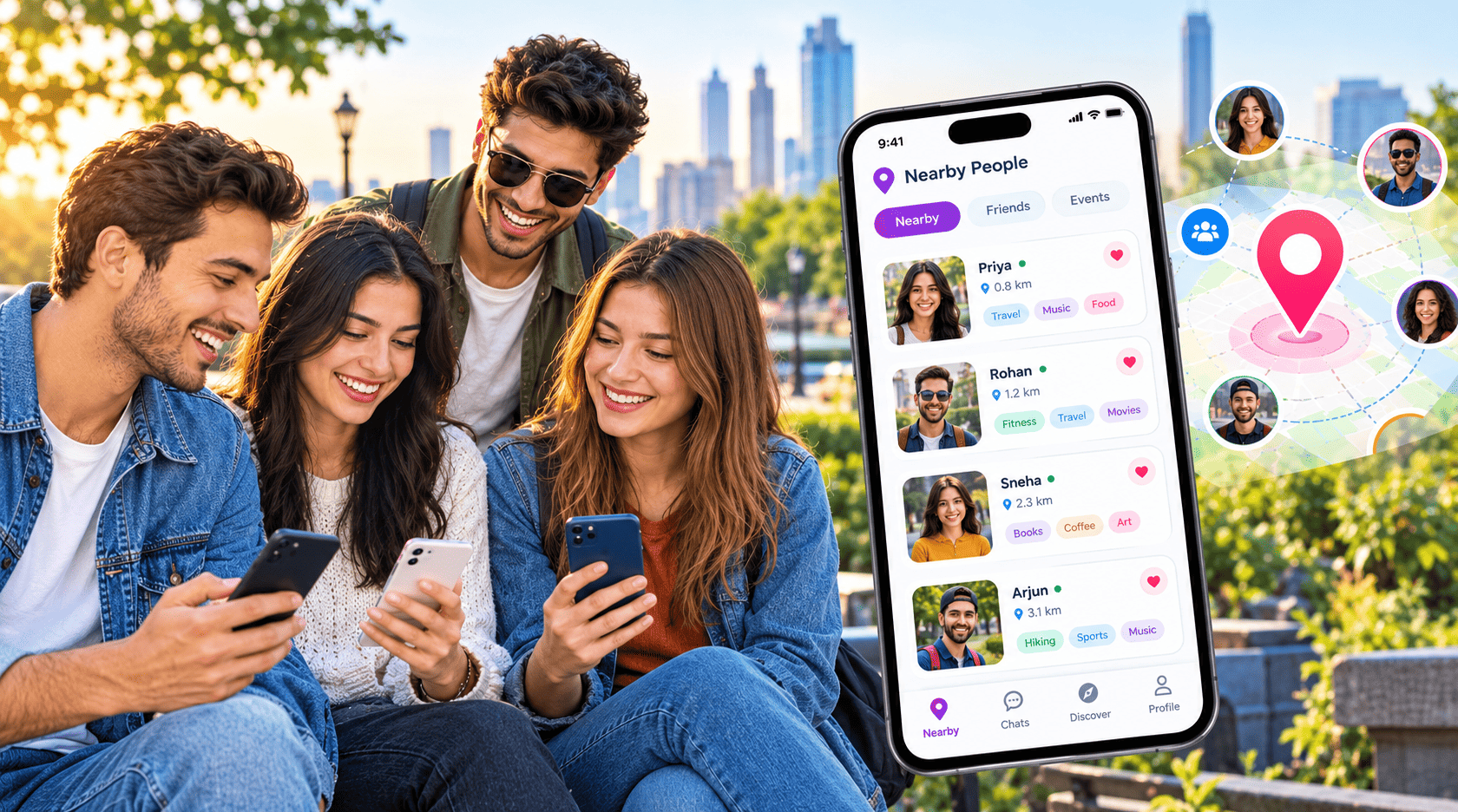
For example, JoinMeIn's 30-mile radar and nearby activity discovery can help you explore people and plans in your broader area, depending on what is available locally. You can browse social opportunities, look for activities that interest you, and decide which plans are worth pursuing.
You don't need to travel the full distance. Start with nearby options that are convenient and comfortable, then expand your search if you want more variety.
When arranging an in-person meeting with someone new, choose a public place, confirm the details, and share your plans with someone you trust.
4. Be the person who follows up
Friendship can grow when someone takes the initiative to reconnect. Send a short message after an event, share a relevant recommendation, or ask whether someone plans to attend the next session.
Keep it natural. You don't need to message every person you meet or maintain constant conversations. Focus on people with whom you genuinely enjoyed interacting.
Your Weekend 3 checklist
Return to one familiar activity or location.
Follow up with someone you enjoyed meeting.
Suggest one simple group or individual plan.
Identify one or two activities worth repeating.
Weekend 4: Build a Social Routine You Can Maintain
Goal: Turn occasional encounters into regular opportunities for connection.
By the fourth weekend, you may have met several people, discovered a favourite location, or found an activity you want to continue. You may also feel that progress has been slower than expected. Both experiences are normal.
Instead of measuring success by how many friends you've made, focus on whether you are creating more opportunities for meaningful interaction.
1. Choose two recurring social activities
Pick two activities that fit your interests, budget, and schedule. For example, you could attend a weekly fitness class and a monthly book club, or combine a regular coffee outing with a weekend volunteer group.
Recurring activities help you see familiar people without having to organise a completely new event every time.
2. Create a simple weekend routine
A manageable routine might look like this:
Treat this as a flexible example, not a strict schedule. Your routine should leave room for rest, household responsibilities, and spontaneous plans.
3. Start hosting small plans
You don't have to be the most outgoing person in the group to organise something. Suggest a coffee outing, invite a few acquaintances to a public event, or ask whether anyone wants to join a weekend walk.
A clear plan is often easier for people to respond to than a general invitation to socialise.
Keep the first gathering small and simple. If people enjoy it, you can repeat the activity or let someone else suggest the next plan.
4. Review what is working
At the end of your fourth weekend, ask yourself:
Which activities made me feel comfortable?
Where did I have the most natural conversations?
Which people would I like to see again?
What can I realistically continue next month?
Do I need to try a different type of group or activity?
Use your answers to shape the next month. A good social routine is one that fits your actual life, not an idealized version of how outgoing you think you should be.
Your Weekend 4 checklist
Select two recurring social activities.
Make one plan for the following week.
Reconnect with someone you have already met.
Set a realistic social goal for the next month.

How to Meet People After Moving If You're an Introvert
You don't need to become an extrovert to build a social life in a new city. If large gatherings feel tiring, focus on smaller settings where conversation develops naturally.
Consider these approaches:
Choose structured activities. Workshops, classes, volunteering, and guided activities give you a shared purpose. This can reduce the pressure to keep a conversation going.
Prefer smaller groups. A group of three or four people may feel more manageable than a large party or networking event.
Arrive with one goal. Instead of expecting to meet five new people, aim to speak to one person or learn the name of another regular participant.
Give yourself permission to leave. You can attend an event for 30 minutes and decide whether you want to stay longer. Knowing you have an exit option can make trying something new less intimidating.
Repeat what works. If you enjoy a particular class or group, return to it. Familiarity can make future interactions easier. The aim is not to change your personality. It is to find social settings that work with it.
What If You're Experiencing Moving and Loneliness?
Feeling lonely after relocation can happen even when you wanted the move. You might miss spontaneous conversations with old friends, familiar family routines, or simply knowing where you belong.
It can help to separate loneliness from the practical challenge of building a new social network. You may need time to develop both a sense of familiarity with your surroundings and relationships that feel comfortable.
Try these steps:
Maintain existing relationships: Schedule calls with old friends and family while you build new connections.
Get outside regularly: A short walk, library visit, or coffee outing can add structure to an unfamiliar week.
Make small social commitments: One class or event can be more manageable than an entire weekend of plans.
Keep basic routines: Sleep, meals, movement, and downtime can help you manage the demands of settling in.
Allow the transition to take time: Four weekends can create momentum, but close friendships may take much longer to develop.
If loneliness becomes persistent, overwhelming, or starts interfering with daily life, consider speaking with a qualified mental health professional or a trusted support service. You do not have to handle a difficult transition entirely on your own.
Common Mistakes to Avoid When Making Friends After Relocating
A few common habits can make the process feel harder than it needs to be.
Expecting instant friendships: A pleasant first conversation is a beginning, not a guarantee of a close relationship. Give connections room to develop.
Trying too many activities at once: Filling every weekend can leave you exhausted. Start with one or two activities and build from there.
Waiting for everyone else to initiate: Some people are friendly but busy or unsure whether you want to reconnect. A thoughtful follow-up can help.
Choosing activities you don't enjoy: You are more likely to return when an activity is genuinely interesting to you.
Taking every rejection personally: People may be unavailable because of work, family, finances, or existing commitments. Look for mutual interest over time rather than judging a connection by one response.
Ignoring your own comfort and safety: Be selective about who you meet, where you go, and how much personal information you share.
How JoinMeIn Can Help You Discover Social Opportunities
When you're new to the area, one of the hardest parts is knowing what people are doing nearby and where to begin.
JoinMeIn is an in-real-life social app designed to help people discover nearby people, plans, and activities. Its radar experience lets users choose when to go live, explore local social opportunities, and connect around interests and plans.
This can be useful during your first month in a new city because you can look beyond your existing circle and discover options for real-world interaction. Availability will depend on your location and the people or events active nearby.
If you're comparing ways to meet people, read the guide to the best IRL social app for meeting people in 2026 for more information about social discovery and in-person connections.
You can also explore JoinMeIn's story and approach to building real-life connections to understand its focus on helping people move from online discovery to meeting in person.
Use any app as one part of your social plan. Combine digital discovery with recurring activities, neighbourhood exploration, and direct invitations to build a social life that feels natural to you.
Your New City, One Weekend at a Time
Learning how to meet people after moving is less about being instantly popular and more about creating opportunities for connection. Explore your neighbourhood during the first weekend, join a shared-interest activity during the second, follow up with new acquaintances during the third, and build a repeatable social routine during the fourth.
You don't need to have everything figured out after one month. Every conversation, local discovery, and invitation can help you become more familiar with your surroundings and more comfortable in your new community.
Start small, keep showing up, and give relationships time to grow. Your new city can begin to feel more like home one weekend at a time.
Frequently Asked Questions
How do you meet people after moving to a new city?
How long does it take to make friends after relocating?
What should I do on my first weekends in a new city?
How can I make friends after moving if I work remotely?
Are social apps useful for meeting people after moving?
Keep reading

How to Make Friends as an Adult in New York City

How to Find a Jam Session Near Me in New York or Host Your Own

How JoinMeIn helps you find local meetups and meet new people in person
Meet people in real life with JoinMeIn
Go live when you are free, see who is nearby, and turn a good idea into a real meetup today.
Get in touch
Have a question, a story, or a topic you would like us to cover? We are always ready to help.